
A checklist for choosing a web development partner
What to review about planning, responsive design, technical SEO, operation, ownership, and maintenance before outsourcing a website, web product, or admin system.
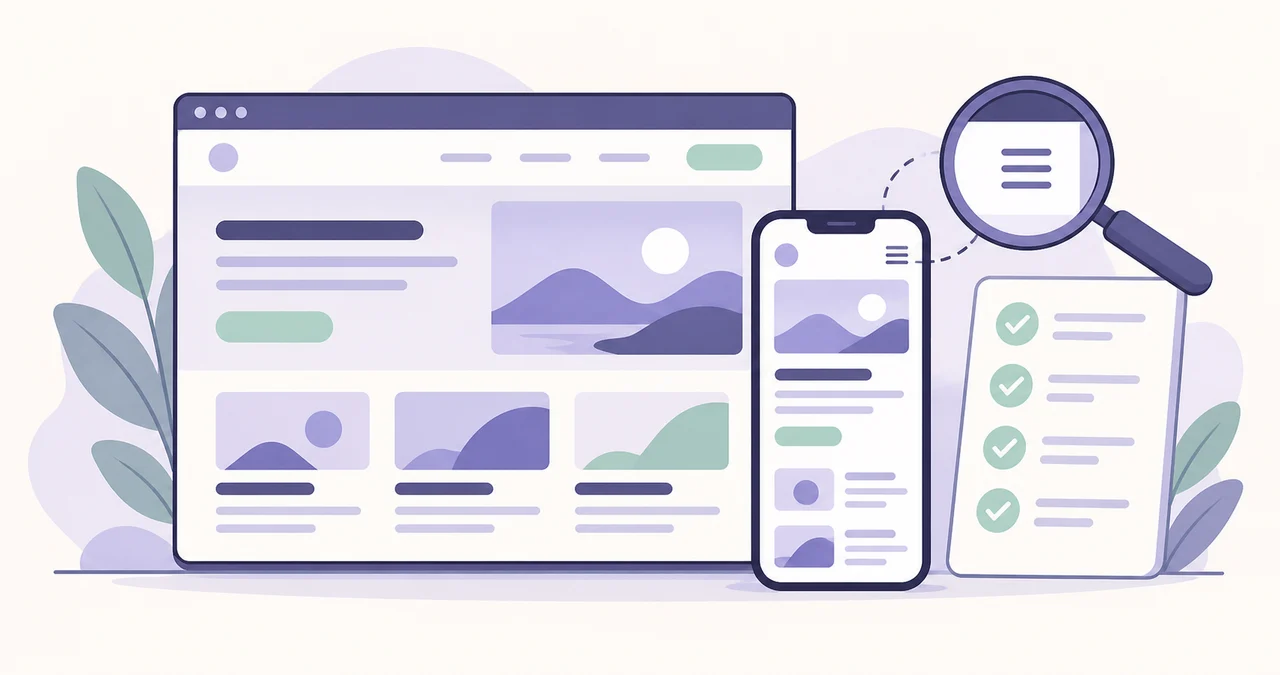
Outsourced web development is more than creating attractive screens. Search discovery, mobile usability, conversion, content updates, and data management all belong to the real operational experience. The criteria below make it easier to compare what different proposals and partners will actually deliver.
1. Distinguish a website from a web product
A company or brand website mainly communicates information and converts inquiries. A web product centers on ongoing functions such as accounts, permissions, payments, and stored data.
These categories require different planning and testing. Even a product with few pages may be substantial when it includes membership and administrative functions.
2. Responsive design is not simply shrinking desktop
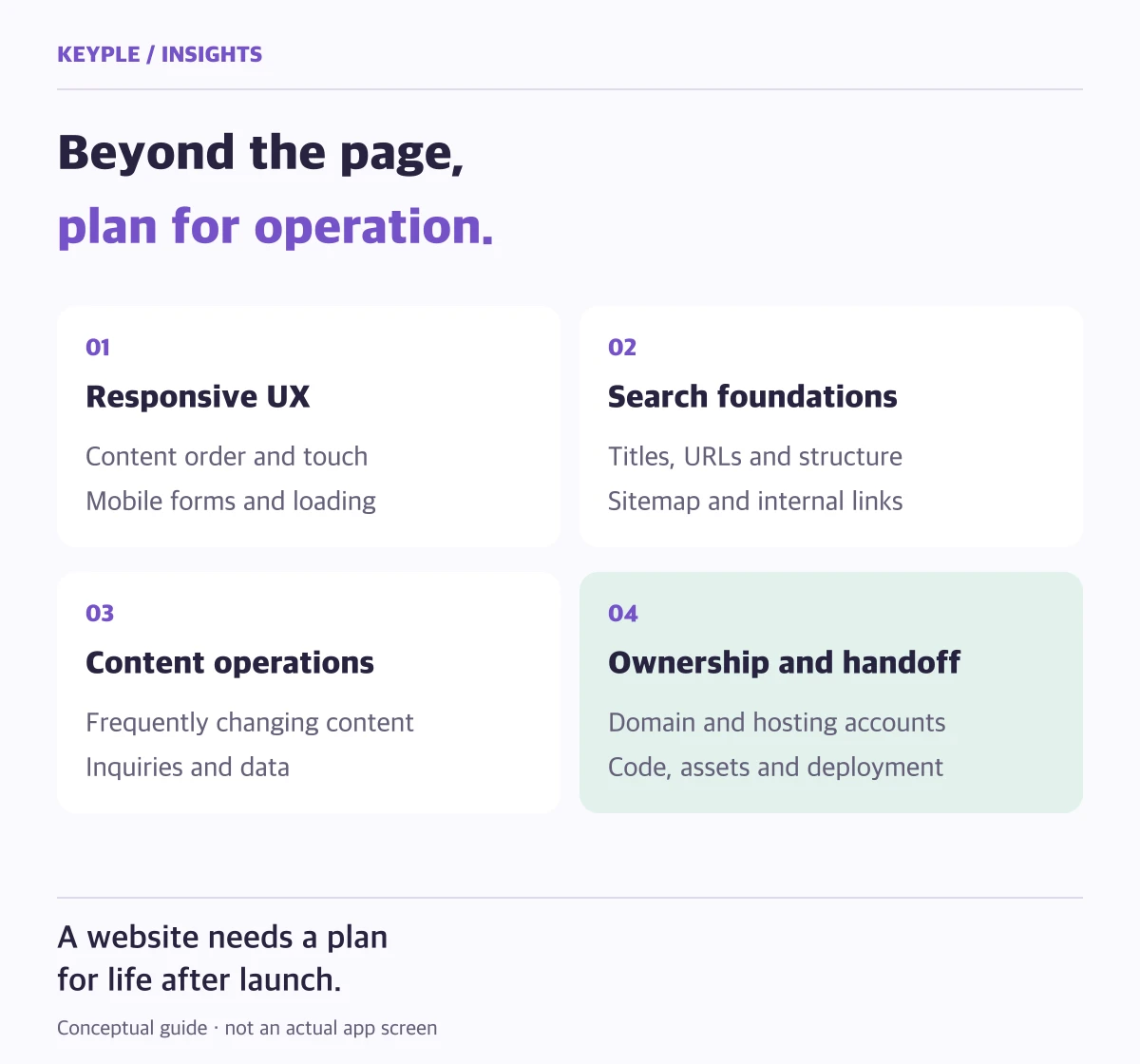
On mobile, information order and interaction patterns must be redesigned rather than reduced in size. Menus, tables, forms, and buttons must remain readable and comfortable to operate on a small screen.
- Content priorities for mobile, tablet, and desktop
- Touch-target sizes and form usability
- Image and video impact on loading speed
- Mobile treatment of long tables and administrative data
3. Confirm that technical search foundations are included
SEO is not the repetition of keywords. Every public page needs a clear title and description, readable content structure, one representative URL, a sitemap, and internal links so search engines can interpret it.
After launch, connect search tools and monitor crawling, indexing, and the queries that actually bring visitors to the site.
4. Decide what operators need to change themselves
Frequently changing information such as news, portfolio items, products, and inquiries is easier to manage with an admin system. Turning every fixed sentence into managed content, however, increases initial cost and complexity.
Separate high-frequency operational data from stable content that can remain in the codebase.
5. Clarify operation and ownership before contracting
Where possible, domains, hosting, analytics, and external-service accounts should remain under the client's ownership. Also confirm source code and design delivery, deployment access, the defect-warranty period, and the maintenance model.
- Ownership of the domain and hosting account
- Delivery scope for source code, design files, and data
- Permissions for search, analytics, and administrator accounts
- Acceptance criteria, review period, and revision scope
- Incident response and future-feature development
Frequently asked questions
Is a responsive website different from a mobile website?
A responsive site uses the same URL and content while adapting layout and interactions to screen width. This usually keeps content and search signals more consistent than a separate mobile site.
Can an admin system be included in outsourced web development?
Yes. We review the content, inquiries, members, orders, and other data operators need to manage and design the appropriate permissions and tools.
Will a new website immediately rank at the top of search results?
Technical SEO gives search engines the ability to crawl and understand the site. Actual rankings also depend on content quality, competition, external references, and consistent operation over time.