
How to define the scope and timeline of an MVP app
A practical way to define an MVP hypothesis, essential features, planning, design, development, testing, launch, and post-release scope.
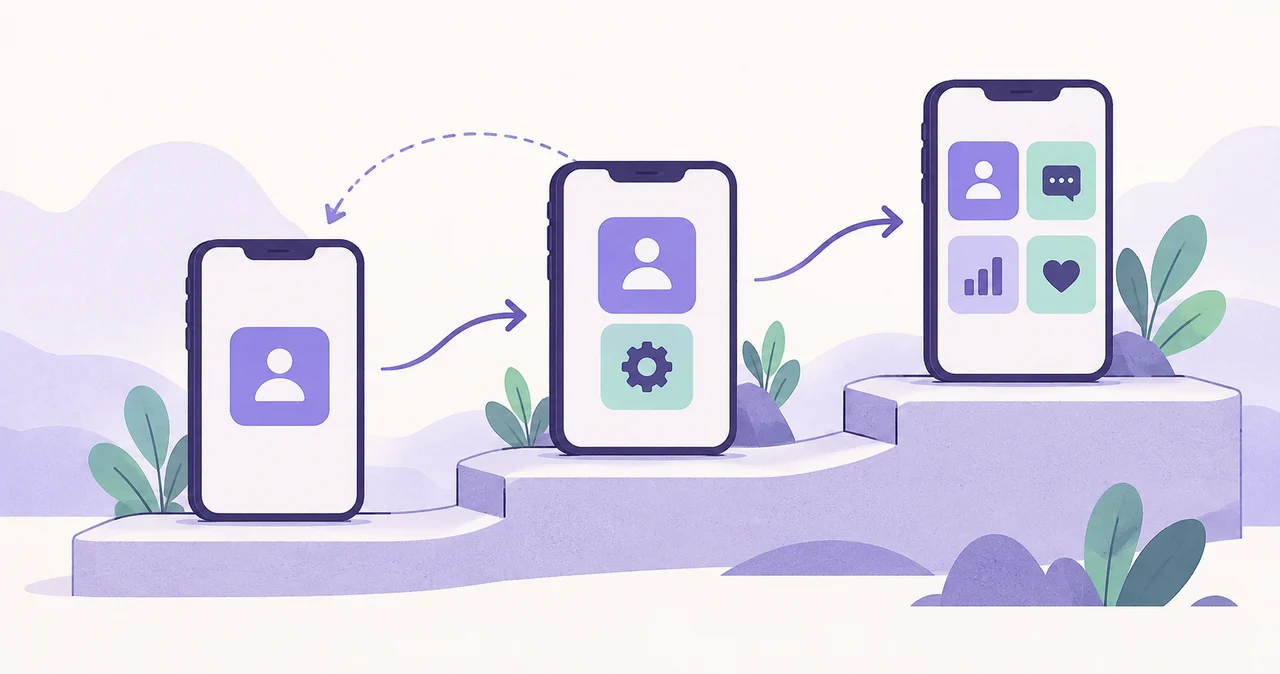
An MVP is not simply an unfinished app. It is the first product capable of testing the most important assumption with real users. The scope should let users complete the central action and let operators see the outcome, while postponing features that do not contribute to that validation.
1. Define one assumption in a sentence
A useful statement identifies the audience, core action, and expected result—for example, ‘users upload a photo, receive expert feedback, and return.’ Features that do not directly support the sentence become candidates for a later release.
Choose a measure close to product value, such as core-action completion, return usage, or inquiry conversion, instead of relying only on registration totals.
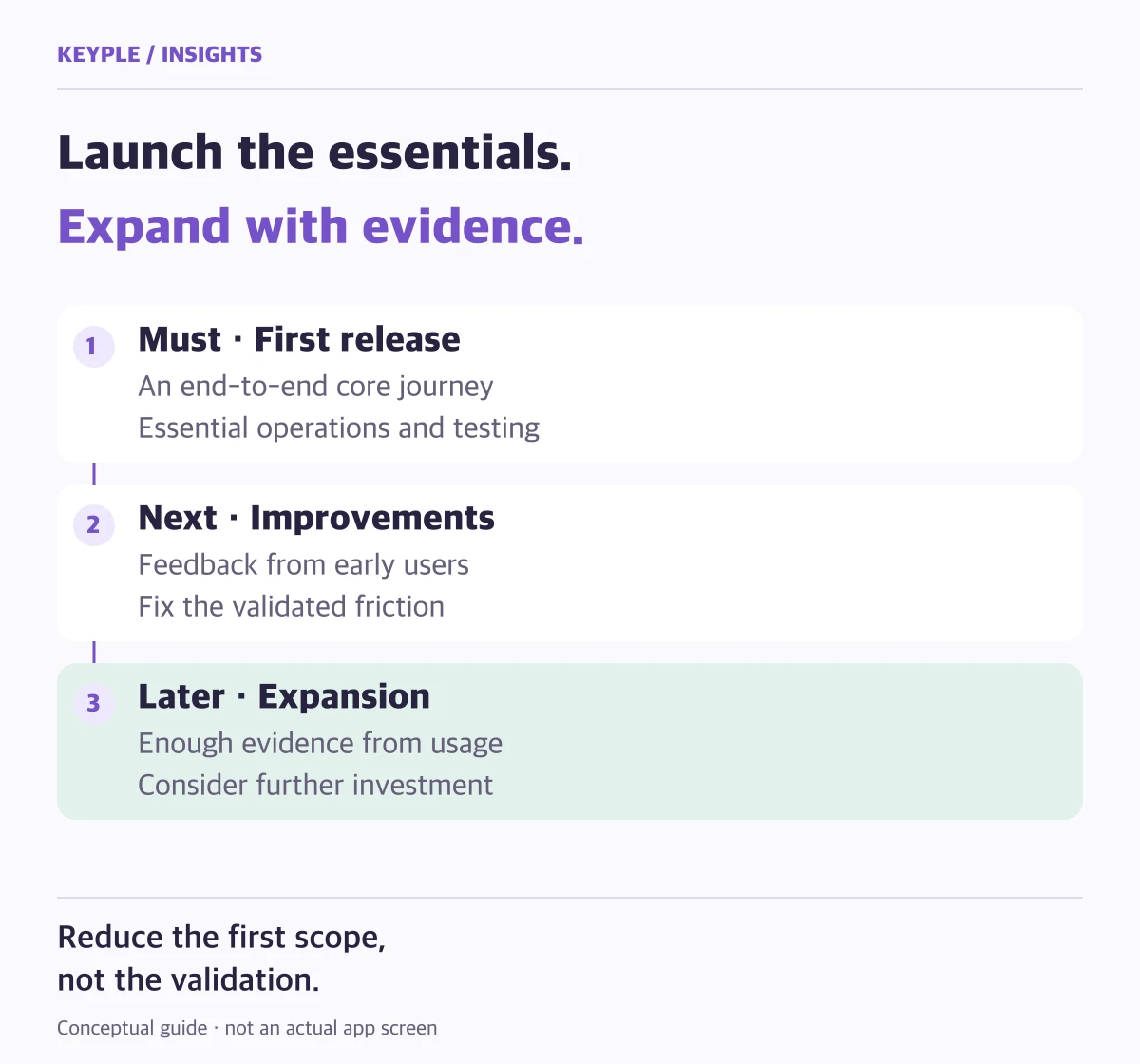
2. Separate features into Must, Next, and Later
Must contains only what keeps the journey intact from entry through the core action and its result. Next holds improvements that can follow early feedback, while Later contains investments to consider after enough usage data exists.
- The essential journey each user role must complete
- Foundations such as authentication, permissions, and payments
- Real operating states such as errors, empty screens, cancellation, and retry
- Minimum tools operators need to review and process users, content, or inquiries
- Analytics events and error records needed to evaluate the release
3. Put phases and decision points on the schedule
The range varies significantly with readiness and feature depth, but an illustrative MVP plan might allocate 1–2 weeks to product definition, 1–3 weeks to UI/UX, 4–10 weeks to development, and 1–2 weeks to integrated testing and launch preparation. Phases can overlap, while external integrations and review processes can extend them.
A useful schedule shows decisions such as journey approval, design sign-off, API readiness, test builds, and store submission. Delayed approvals affect delivery just as implementation changes do.
4. Include operational work outside the user interface
A polished app is difficult to operate if no one can correct data or process inquiries. Decide whether the first release requires an admin system or whether existing tools and a manual workflow can support early validation.
Assign ownership of domains, store accounts, privacy documents, notification certificates, analytics, and error monitoring before launch.
5. Agree on release criteria and the next version
Replace vague goals such as ‘no errors on every device’ with supported OS versions, critical journeys, known limitations, and severity definitions. Record postponed features with a priority and a date for review.
KEYPLE separates the main user journey and integrated features during the first conversation, then defines MVP scope and timing around phased deliverables and acceptance criteria.
Frequently asked questions
Can I discuss an MVP without a finished specification?
Yes. We can begin with the problem, primary users, essential action, reference products, and target timing, then define an initial scope together.
Does every MVP need an admin system?
It depends on data volume and processing frequency. Early operations may use manual tools, with an admin system added when repeated work and permissions justify it.
Should app-review time be included in the schedule?
Yes. Prepare accounts and policy documents before submission and leave time to respond to review feedback.